
Jefferson County Criminal Court Records
A Jefferson County criminal court record is the case-level file maintained by the court after charges are filed. It is not just an arrest notice. The court file can show the charging document, arraignment entry, bond order, plea, motions, hearing settings, trial result, dismissal, verdict, sentencing order, restitution, probation terms, and post-conviction filings. The full criminal case file gives more context than a charge list because it shows how the case moved through court and how each charge ended.
Criminal case routing depends on court level. Circuit Court handles felony prosecutions and other criminal matters assigned by law. District Court handles misdemeanors, preliminary hearings, and district-level criminal proceedings. Municipal courts handle city ordinance cases, municipal misdemeanors, and many city-issued traffic citations. Jefferson County also has Birmingham Division and Bessemer Cutoff routing, so the location shown on the complaint, indictment, bond paperwork, or notice can matter when searching or requesting copies.
Search Jefferson County Criminal Court Records
The main public search path for state criminal case records is Alabama Trial Court Records. Search by case number when possible. A defendant-name search can return multiple people, old cases, civil cases, or attorney entries, especially in a large county. Limit the search to Jefferson County, choose the proper court type when available, and compare the filing date, defendant name, charge, court, and case status before treating the result as the correct case.
- Open the Alabama Trial Court Records portal and choose the search path for a party name or case number.
- Limit the search to Jefferson County when the county filter is available.
- Use court or case-type filters to narrow Circuit Court felony cases, District Court misdemeanors, and other criminal matters.
- Open the case result and read the docket entries, charge list, pleas, disposition, and sentencing entries together.
- Request certified copies from the Circuit Clerk or responsible court when the document must be used for legal, licensing, or official purposes.
The ALEA Alabama Background Check process is separate from the county court case file.
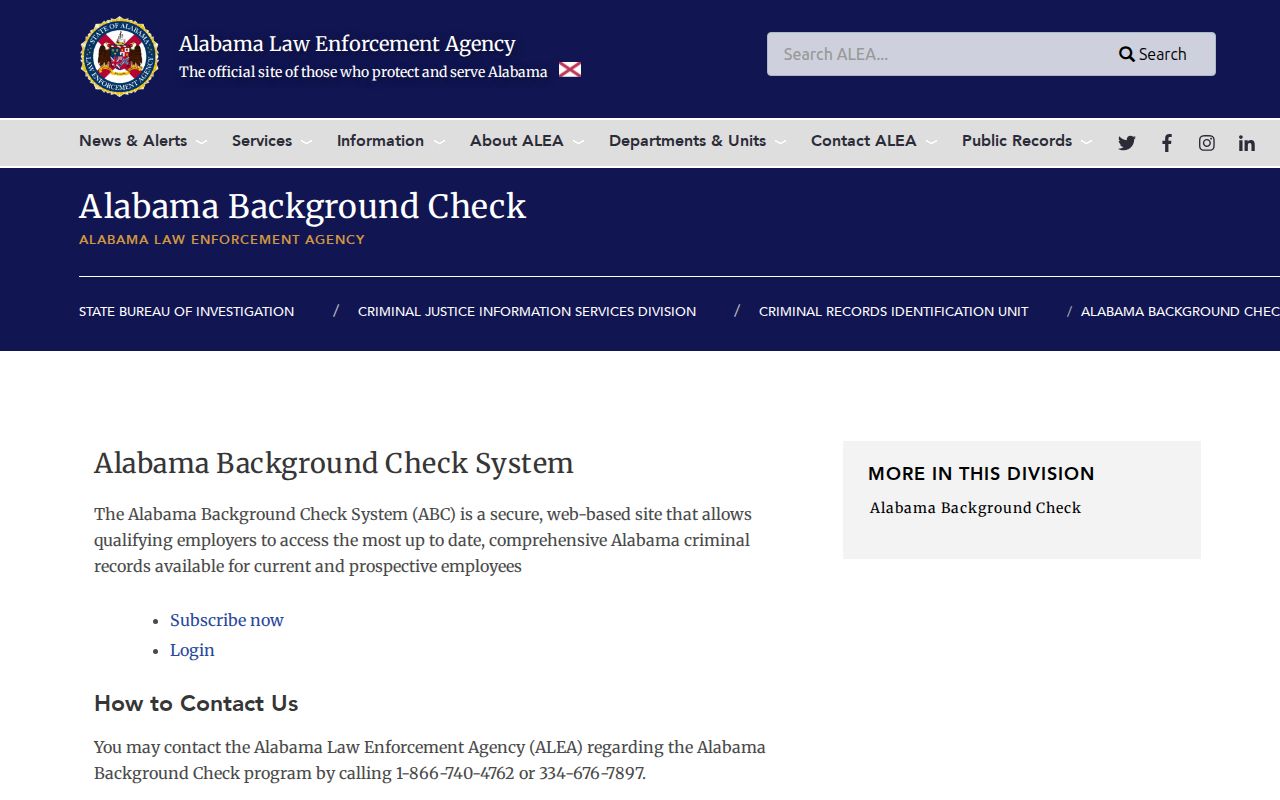
ALEA products can be useful for state criminal-history purposes, but a Jefferson County court record remains the source for docket entries, pleas, orders, dispositions, and sentencing in the court case.
Jefferson County Criminal Case Flow
A criminal record changes as the case moves. An arrest or complaint may begin the process, but the court record becomes more complete as the prosecutor files or carries charges, the defendant appears, motions are heard, and the court enters orders. One case may have several charges, and each charge can have a different status. Read the docket and charge table together before deciding whether the case ended in conviction, dismissal, acquittal, transfer, or another outcome.
Case flow: Charges Filed › Arraignment › Pretrial / Motions › Plea or Trial › Disposition › Sentencing
| Stage | What Happens |
|---|---|
| Charges Filed | A complaint, information, indictment, or other charging record states the alleged offense and count. |
| Arraignment | The defendant is formally called before the court and enters or is assigned a plea. |
| Pretrial / Motions | The record may show bond activity, discovery disputes, continuances, suppression motions, or plea negotiations. |
| Plea or Trial | The case resolves by plea, bench trial, jury trial, dismissal, or another court-approved disposition. |
| Disposition | The docket shows the outcome for the case or for each charge, such as guilty, not guilty, dismissed, or nolle prosequi. |
| Sentencing | After conviction or plea, the court may enter jail, prison, probation, restitution, fines, costs, or other sentence terms. |
What Jefferson County Criminal Records Show
The criminal case record is a field-by-field story of the prosecution. It can start with a warrant return, complaint, indictment, or other charging document, then add court events as the case proceeds. The docket may include hearings, motions, orders, plea entries, trial settings, verdicts, and sentencing. It may also show bond, restitution, court costs, probation, and post-conviction filings. If a person only needs arrest or booking status, the jail roster is a different source; if the person needs court outcome, the criminal court record is the better source.
| Field | What It Shows |
|---|---|
| Case Number | The court identifier used for exact searches, docket review, and certified-copy requests. |
| Defendant | The person charged in the criminal case, with party details where public. |
| Court / Division | Circuit, District, municipal, Birmingham Division, or Bessemer Cutoff routing. |
| Charges | Offense names, counts, statute references, severity, amendments, reductions, or dismissed charges. |
| Plea | Guilty, not guilty, or other plea activity entered in court. |
| Docket Entries | Hearings, motions, notices, orders, continuances, verdicts, plea entries, and sentencing activity. |
| Disposition | The outcome, such as guilty, acquitted, dismissed, nolle prosequi, transferred, or closed. |
| Sentence | Jail or prison term, probation, fines, costs, restitution, treatment terms, or other court orders. |
Jefferson County Charges vs Convictions
A charge is an accusation. A conviction is an outcome after a guilty plea, guilty verdict, or other court result that counts as a conviction under law. Jefferson County criminal court records can show charges that were amended, reduced, dropped, dismissed, or ended in acquittal. A person can have a public case record without a conviction on every count. For a closer look at the allegation itself and court charges after arrest, use the charge-focused record rather than treating every charge as final.
| Point | Charge | Conviction |
|---|---|---|
| Meaning | An allegation filed or carried in court. | A court outcome based on plea, verdict, or qualifying disposition. |
| Timing | Appears near the start of the case and may change. | Appears after plea, trial, or final disposition. |
| Record Risk | May remain visible unless sealed or expunged. | May affect sentencing, licensing, supervision, and criminal history. |
| Where to Read | Charge list, complaint, indictment, or docket entry. | Disposition, judgment, sentencing order, and criminal-history products. |
Read Dispositions and Sentences
Disposition terms should be read by count. A guilty disposition on one count does not mean every count ended the same way. A nolle prosequi entry means the prosecutor declined to continue that charge. A dismissal can be with prejudice, which usually bars refiling, or without prejudice, which may allow refiling. An acquittal means the person was found not guilty of that charge. Sentencing entries may list confinement, probation, restitution, court costs, fines, suspended time, or conditions of release.
For Jefferson County, check whether the case is in Circuit Court, District Court, or municipal court before reading the sentence. A felony sentence may involve Alabama Department of Corrections custody after local jail processing. A misdemeanor may involve county jail, probation, fines, court costs, or municipal conditions. A court record can mention jail custody, but current custody status is a separate lookup through the jail, ADOC, or BOP depending on where the person is held.
Jefferson County Sealed vs Expunged Records
Sealed and expunged records are not the same. A sealed record is hidden from ordinary public access by court order or law, but it may still exist for limited court or agency use. An expunged record is restricted under Alabama expungement law and removed from ordinary public access if the court grants the petition. A dismissed or acquitted charge is not automatically expunged. The person generally must compare the case to Alabama eligibility rules and file in the court with jurisdiction.
| Point | Sealed | Expunged |
|---|---|---|
| Public View | Blocked or limited by statute or court order. | Removed from ordinary public access after a qualifying order. |
| Record Exists | Usually still exists under restricted access. | Restricted by expungement order, with statutory exceptions. |
| Eligibility | Depends on record type, privacy rule, and court order. | Depends on Ala. Code § 15-27-1 et seq., disposition, waiting periods, and pending-charge rules. |
| Common Examples | Juvenile, mental-health, victim-sensitive, or sealed filings. | Eligible non-conviction records and some qualifying conviction categories. |
Jefferson County Criminal Records Access
Criminal court records are public in many situations, but access is not unlimited. Alabama's public-records statute, Ala. Code § 36-12-40, supports inspection and copying of public writings subject to exceptions. Ala. Code § 36-12-41 allows lawful copy and certification fees. Criminal court jurisdiction and record routing are tied to court structure, including Circuit Court jurisdiction under Ala. Code § 12-11-30 and District Court criminal jurisdiction under related district-court provisions.
The Alabama Legislature Code portal is the official source for checking current Alabama statutes that affect criminal court records and expungement.
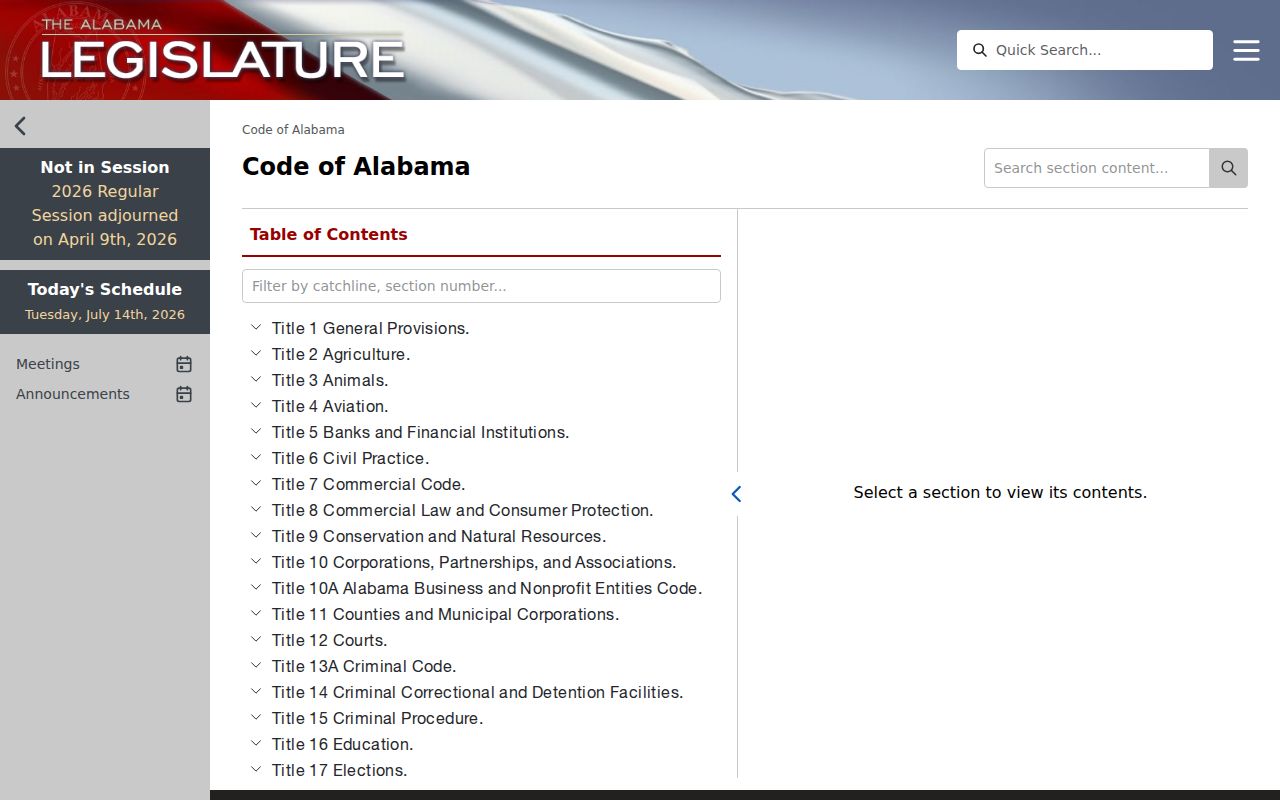
Statutes explain the legal framework, but the practical copy path still runs through the court clerk, the state portal, ALEA, or the court that controls the record.
Key point: Certified criminal court records come from the court clerk, not from screenshots, jail rosters, news releases, or third-party search results.
Criminal History vs Court File
A court file and a criminal-history background check answer different questions. The court file shows the local case: charges, docket entries, pleas, rulings, dispositions, and sentences. ALEA handles official Alabama background-check products. Jail records show current or past custody facts, while ADOC covers sentenced state-prison custody. A public defender is not a records office, and a district attorney file is not the same as the public clerk file because prosecutor work product and victim-sensitive material may be restricted.
Important: Do not use informal court searches as FCRA-regulated employment, tenant, credit, insurance, or licensing background reports.
Restricted Jefferson County Criminal Records
Juvenile criminal records are restricted under Ala. Code § 12-15-133. Sealed cases, expunged cases, certain victim-sensitive filings, medical records, mental-health information, and some active-investigation materials are not ordinary public files. Redactions can remove Social Security numbers, account data, minor information, and other protected identifiers even when the docket remains public.
Access to restricted criminal court records usually requires party status, attorney status, statutory authority, or a court order. A negative online search does not prove that no criminal case exists. It may mean the case is sealed, expunged, filed in another court, held by a municipal court, under a different name or case number, or not available in the public portal.